

Why Growing Businesses Break Without an IT Roadmap (And How to Fix It)
The invisible cost of running without a plan
In 2026, fast‑growing organisations are hitting a common wall: technology decisions are made in isolation, reactively, and without a clear view of where the business is going next.
Sales grows, headcount increases, new locations open, but the IT estate is still a patchwork of “what we bought when someone shouted the loudest”.
Research on SMB and mid‑market environments shows this lack of IT strategy as a top pain point: investments don’t align with business objectives, modernization is piecemeal, and leaders have no single view of risk, capacity, or priorities.
A real incident: when growth outran the infrastructure
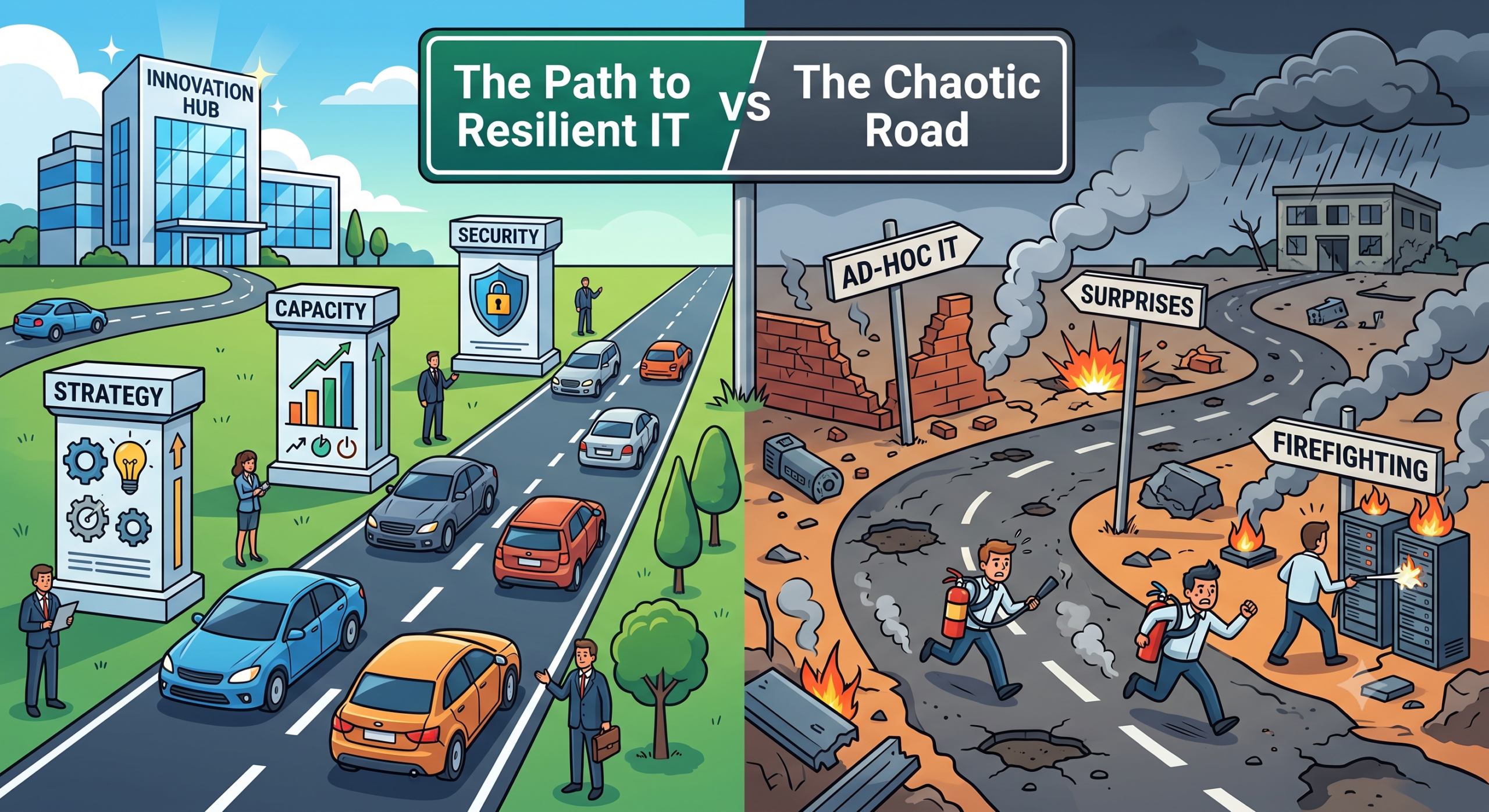
One mid‑sized services firm we worked with had tripled its staff in three years. They had no IT roadmap, just accumulated decisions:
Three different CRM tools across teams.
A mix of on‑prem file servers and unmanaged cloud storage.
No clear ownership for identity and access.
The breaking point came when they tried to onboard a large client and discovered they couldn’t reliably share data across teams without manual work and security compromises. Internal friction delayed the project, and the client’s confidence dropped sharply.
Nothing was “down”, but everything was slow, uncertain, and hard to change. That’s what a missing roadmap looks like in practice.
What an effective IT roadmap actually does
An IT roadmap is not a long document full of buzzwords. At its core, it connects three things:
Business objectives: growth targets, new markets, offerings.
Technology capabilities: infrastructure, applications, security posture.
Sequenced actions: what must change, when, and in what order.
Good roadmaps:
Identify systems that will become bottlenecks at the next stage of growth.
Align projects with realistic capacity, so internal teams are not permanently overloaded.
Make investments traceable to outcomes: resilience, faster delivery, lower risk.
Industry guidance emphasises that strategic IT planning is no longer optional; it is a “now” requirement for resilience and competitiveness.
How Infosolic builds roadmaps that executives actually use
When we build an IT roadmap with a client, we treat it as an operating tool, not a presentation slide. We start with a discovery phase: mapping systems, dependencies, pain points, and existing plans. Then we sit with business leadership, not just IT, to understand where growth is expected, what risks keep them uncomfortable, and where technology has quietly become the bottleneck.
A 12–24 month view of infrastructure, application, and security changes.
Clear owner for each initiative (Infosolic, client IT, or shared).
Business‑level outcomes (“reduce onboarding time by 30%”, “remove single points of failure in branch connectivity”) for each item.
Most importantly, we review it regularly.
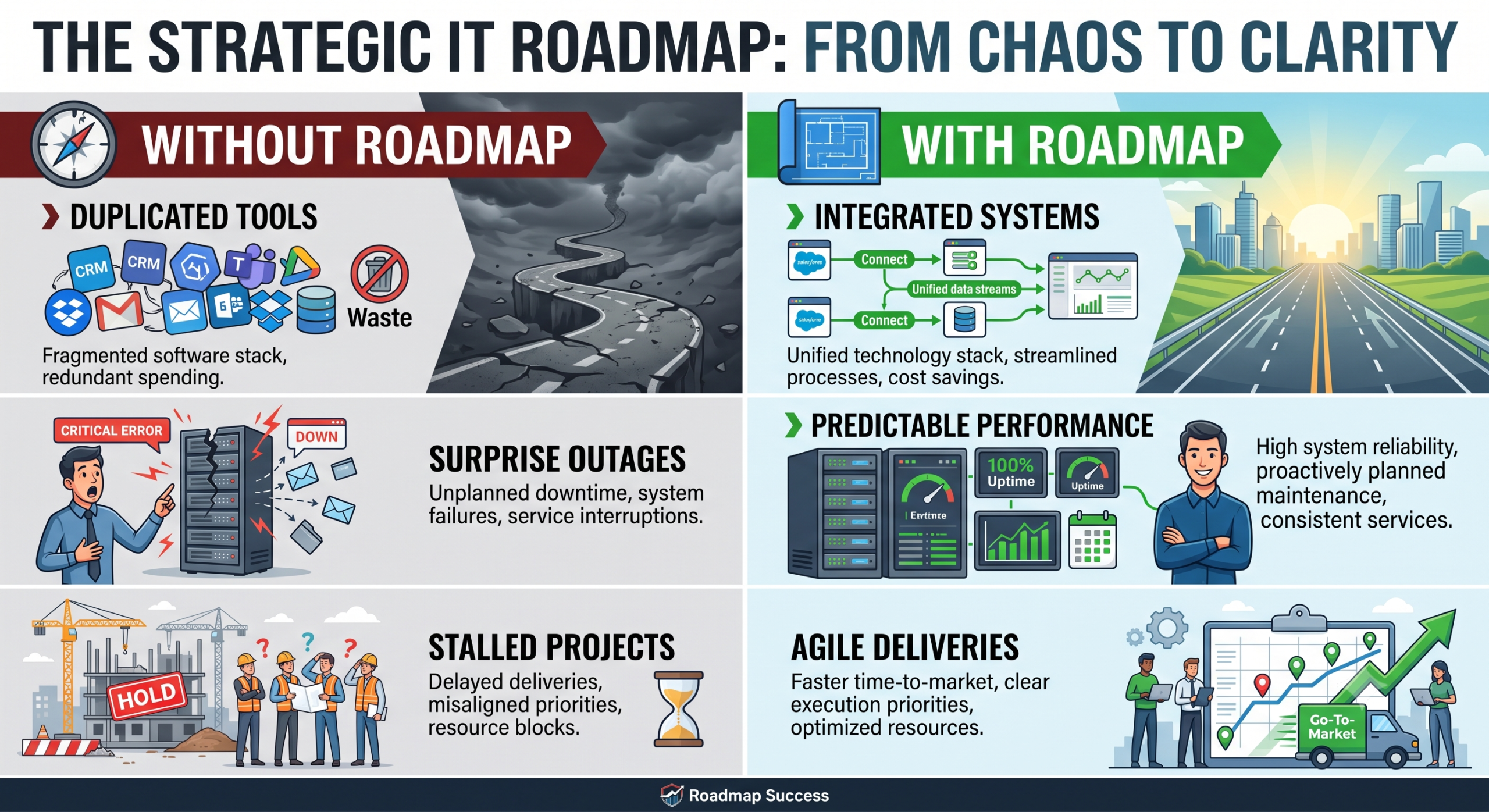
A roadmap that isn’t revisited becomes a shelf artifact.
A roadmap that evolves becomes the way decisions are made.
To see how Infosolic translates this into real change, click “the Case Study” button and explore how we helped a growing organisation move from ad‑hoc IT decisions to a clear, outcome‑driven roadmap.